

To successfully enforce landlord and tenant board orders under Ontario’s Residential Tenancies Act, you must take the tribunal’s written decision to the local Court Enforcement Office (Sheriff) for an eviction, or register it with the Ontario Small Claims Court to collect monetary awards. Winning your case is only half the battle, because the tribunal does not enforce its own legally binding decisions. For monetary awards up to the $50,000 limit, you must register the decision before pursuing wage garnishment or property seizure.
TenantPay reports the tribunal processes approximately 80,000 applications annually, making post-order execution a widespread bottleneck. Fortunately, as of October 2025, Toronto matters can be filed online through the Ontario Courts Public Portal, speeding up the transition from a tribunal victory to actual property possession or asset recovery.
Understanding Written Landlord and Tenant Board Orders and Enforceability
A Landlord and Tenant Board (LTB) order only becomes legally binding and enforceable the moment it is issued in writing. While an adjudicator may deliver an oral ruling at the conclusion of your hearing, you cannot take any legal action based on spoken decisions. Enforceability begins exclusively with the formal written document issued by Tribunals Ontario.
The Ontario tribunal system is heavily burdened, processing approximately 80,000 dispute applications annually according to TenantPay data. During backlog peaks, landlords have faced an average wait time of 342 days from filing to securing an eviction order for rent arrears, per tracking by Sicotte. Because of these grueling timelines, many property owners mistakenly assume the written order instantly forces a tenant out or recovers owed funds. It does not.
Limits of Authority Under the RTA
Under the Residential Tenancies Act, 2006 (RTA), landlord and tenant board orders are administrative tribunal decisions, not self-enforcing actions. Securing Residential Landlord Advocacy often focuses heavily on navigating this post-order phase, as property owners are strictly prohibited from performing “self-help” evictions. Changing locks, shutting off utilities, or seizing a tenant’s property yourself violates the RTA and exposes you to severe tribunal penalties.
Once you hold the written order, your enforcement paths diverge based on the granted remedy:
- Eviction enforcement: You must wait for the tenant’s compliance deadline to expire, then file the written eviction order with the local Court Enforcement Office (Sheriff) for physical removal.
- Monetary enforcement: The LTB enforces a strict $50,000 monetary claim limit per application, directly matching the Ontario Small Claims Court jurisdictional ceiling, as confirmed by Chubz Paralegal. To actually collect unpaid rent arrears or compensation, the LTB order must be formally registered as a Small Claims Court judgment.
How Do I Enforce an Eviction Order with the Toronto Court Enforcement Office?
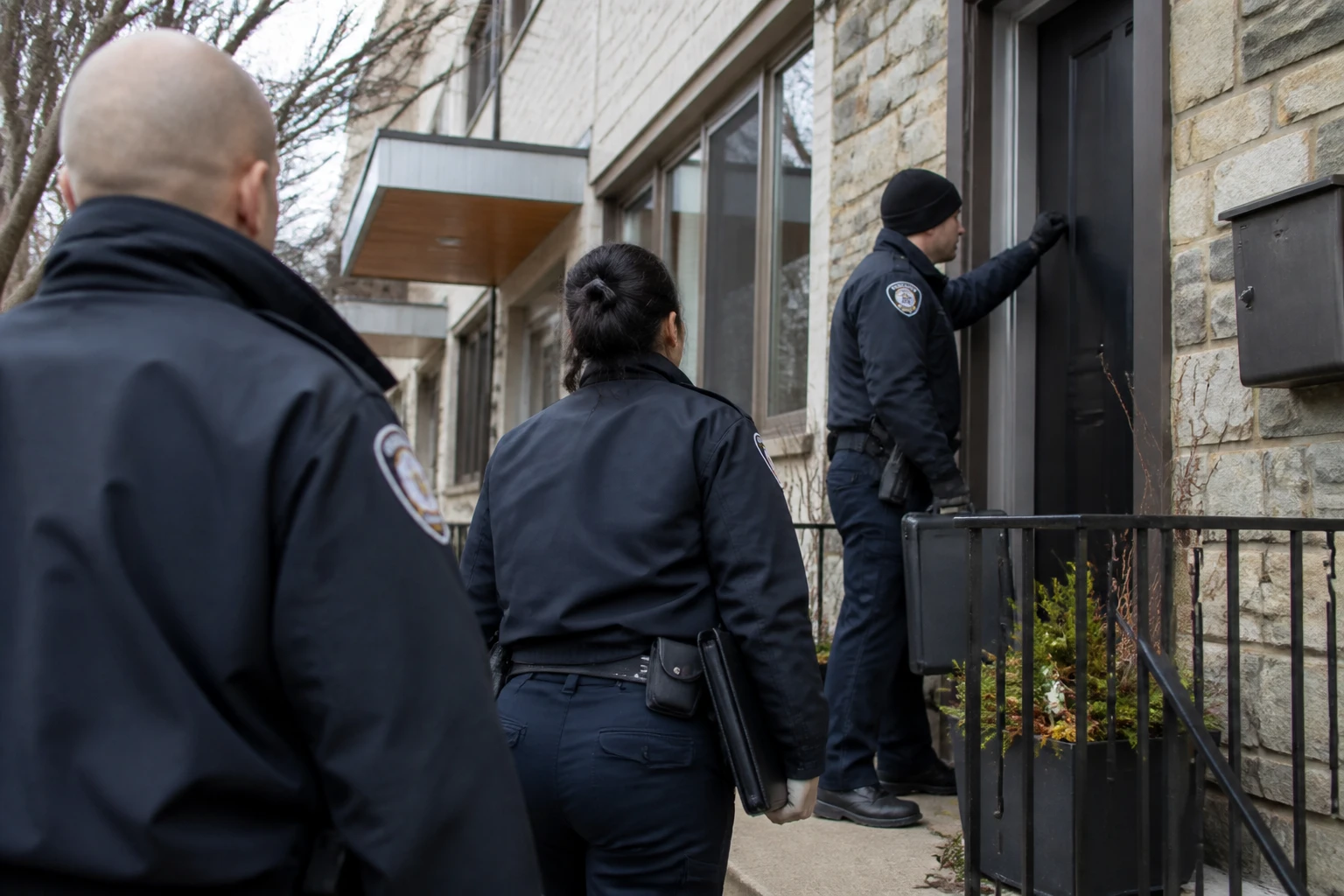
To enforce an eviction, you must file your written landlord and tenant board orders with the local Court Enforcement Office (the Sheriff)—the LTB does not enforce its own decisions. Landlords are strictly prohibited from changing locks or removing tenants themselves under the Residential Tenancies Act, 2006 (RTA). After navigating a system where the peak average wait time from filing to an eviction order for rent arrears reached 342 days (according to Sicotte), executing this final step correctly is critical.
Navigating the Ontario Courts Public Portal for Toronto Properties
You cannot engage the Sheriff until the tenant compliance deadline stated in your written order has expired. Once that date passes, the enforcement process moves online. As of October 2025, the Ministry of the Attorney General enables landlords to file enforcement documents online for Toronto properties directly through the Ontario Courts Public Portal.
- Download the legally binding written order from the Tribunals Ontario Portal.
- Complete a Writ of Possession and the required Eviction Information request form.
- Upload the certified LTB order and forms to the public portal, paying the standard enforcement fee plus the Sheriff’s estimated mileage.
Administrative errors in this paperwork will trigger a rejection. If your eviction is highly contested, bringing in landlord legal representation LTB helps ensure your enforcement filings pass the clerk’s review without costly procedural delays.
Sheriff Execution Day: Key Logistics and Landlord Responsibilities
Once your Writ of Possession is processed, the Court Enforcement Office mails a Notice to Vacate to the tenant, providing a final deadline (usually seven days). If the tenant refuses to leave, the Sheriff schedules a physical eviction date. On execution day, you must manage several strict operational expectations:
- Be physically present: You or your authorized agent must meet the Sheriff at the property at the designated time. If you are absent, the eviction will be canceled.
- Hire a locksmith: The Sheriff is there to safely remove the tenant and hand over legal possession. You must have a locksmith on-site to immediately change the exterior locks the moment the Sheriff clears the unit.
- Follow property retention rules: Do not remove the tenant’s belongings on execution day. Under the RTA, you must provide the evicted tenant with 72 hours of access (between 8:00 a.m. and 8:00 p.m.) to retrieve their personal property before you can sell, keep, or discard it.
How to Handle Last-Minute Divisional Court Appeals and Automatic Eviction Stays
Filing an appeal with the Divisional Court automatically stays the enforcement of landlord and tenant board orders, legally halting the Court Enforcement Office (Sheriff) from locking out a tenant until a judge resolves the matter. Landlords must understand the critical legal distinction between this statutory appeal and an internal LTB Request to Review. A Request to Review does not carry an automatic statutory stay; it requires the tenant to file a separate, explicit motion to pause enforcement.
Recognizing Bad-Faith Procedural Delays vs. Questions of Law
Under the Residential Tenancies Act, 2006 (RTA), parties can submit a Request to Review to the Landlord and Tenant Board within 30 calendar days if an adjudicator made a serious error in law or procedural fairness. Because this internal review does not stop an eviction on its own, some tenants bypass the Board entirely. Instead, they file a Section 210 appeal directly to the Divisional Court—a branch of the Superior Court of Justice—specifically to trigger its automatic statutory stay.
However, Divisional Court appeals are strictly limited to questions of law. When a tenant files an appeal simply arguing they disagree with the eviction, without identifying a legal error made by the tribunal—a standard explored in Landlord and Tenant Board Adjudicators: 7 Essential Facts—it is often a bad-faith procedural delay designed to weaponize the system.
Steps to File a Motion to Vacate an Automatic Stay
When facing a frivolous appeal that pauses your eviction, you do not have to wait months for a full hearing. You can fight the delay by filing a motion to quash the appeal and lift the stay.
- Serve a Notice of Motion: Draft a formal motion to the Divisional Court requesting to quash the appeal for lacking legal merit and to vacate the automatic stay.
- File your affidavit: Submit sworn evidence proving the tenant is weaponizing the appeals process to delay eviction. This often includes highlighting ongoing unpaid rent, which Chubz Paralegal notes currently caps at a $50,000 jurisdictional limit for LTB applications.
- Schedule a motion hearing: Request an expedited date before a Divisional Court judge to review your motion.
If the judge agrees the appeal lacks a genuine question of law, they will quash it and lift the stay, allowing you to immediately execute your landlord and tenant board orders with the Sheriff.

Recovering Rent Arrears: Converting Monetary LTB Orders to Small Claims Judgments
The Landlord and Tenant Board (LTB) does not collect money on your behalf. To actually recover rent arrears, you must register your written landlord and tenant board orders with the Small Claims Court (Ontario) under section 19 of the Statutory Powers Procedure Act.
Once the LTB issues a final written decision—downloadable via the Tribunals Ontario Portal—it becomes a legally binding administrative tribunal decision. However, you cannot enforce it until the tenant’s designated payment deadline passes. Once that date expires, you must file a certified copy of the order with the court. As of October 2025, LTB monetary awards are synchronized with the updated $50,000 Small Claims Court jurisdictional ceiling, according to Chubz Paralegal. Transferring an L1 or L9 award under this limit unlocks standard civil enforcement tools.
Tactical Enforcement Options
Registering the certificate of order converts your LTB award into a Small Claims judgment. From there, landlords have three primary mechanisms to extract payment from an uncooperative former tenant:
- Garnishment of wages or bank accounts: You can serve a Notice of Garnishment on the debtor’s employer to siphon a percentage of their wages, or serve their bank to freeze and seize account balances. This is typically the fastest recovery route if your initial tenant screening captured their financial details.
- Debtor examinations: If you do not know where the tenant works or banks, you can force them to attend an examination hearing under oath. They must legally disclose their assets, income streams, and liabilities, giving you the exact intelligence needed to issue a garnishment.
- Writs of Seizure and Sale: For tenants with significant physical assets or real estate, you can direct the local enforcement office to seize and auction non-exempt personal property to satisfy the debt.
Pursuing arrears requires upfront filing fees, process servers, and time. To offset the financial drain of post-order enforcement, you should map out how to reduce your LTB hearing representation cost during the initial tribunal phase. Preserving your capital early ensures you have the resources to aggressively pursue the actual debt recovery when the order is finalized.
Screening Prospective Tenants with OpenRoom and the Ontario Open Data Catalogue
As of July 2026, housing providers can instantly cross-reference tenancy applicants against final landlord and tenant board orders using the Ontario Open Data Catalogue. Tribunals Ontario now updates this public database monthly, joining established third-party platforms like OpenRoom and CanLII to expose a prospective renter’s litigation history before you hand over the keys. The Landlord and Tenant Board (LTB) processes approximately 80,000 dispute applications annually—the vast majority filed by landlords for non-payment of rent, according to TenantPay. Because standard credit checks frequently fail to capture tribunal judgments, searching these public databases is now a mandatory step in front-end tenant screening.
Spotting Serial Non-Paying Tenants
Searching an applicant’s legal name on the Open Data Catalogue or OpenRoom uncovers historical eviction orders, chronic rent arrears, and property damage claims. These platforms reveal behavioral patterns—such as tenants who repeatedly stop paying rent to exploit tribunal backlogs—allowing you to lawfully deny a tenancy application based on a documented history of non-payment. Always require current, government-issued photo ID during the application phase to ensure the name you are querying matches the applicant exactly.
Privacy Compliance and Lawful Credit Reporting
Because landlord and tenant board orders are administrative tribunal decisions, they are explicitly part of the public record. Sharing and searching them complies with privacy guidelines, provided you use the documents accurately. If you win a monetary order, you can upload the unedited, official written order to OpenRoom to warn other GTA landlords. You can also report the unpaid LTB monetary order to credit bureaus like Equifax through integrated platforms to impact the tenant’s credit profile. To stay compliant with provincial privacy standards, ensure you only ever upload the finalized, written LTB order—never preliminary hearing notices, unproven claims, or personal commentary.
Frequently Asked Questions About Landlord and Tenant Board Orders
Can a landlord enforce an LTB order immediately?
No. You cannot enforce an order the moment an adjudicator makes an oral decision at your hearing. The decision becomes legally binding only after the Landlord and Tenant Board (LTB) issues a final written order. Even then, you must wait for the tenant compliance deadline to expire. Landlords are strictly prohibited under the Residential Tenancies Act, 2006 (RTA) from changing locks or seizing property themselves. You must file the written order with the local Court Enforcement Office (Sheriff) for execution.
What happens if a tenant files a Request to Review after the Sheriff notice is posted?
The eviction process continues unless the tenant successfully files a separate motion to request a stay of order. While parties have 30 calendar days to submit a Request to Review for a serious error of law or procedural fairness issue, this internal review does not automatically pause enforcement. This differs from an appeal to the Divisional Court (a branch of the Superior Court of Justice), which strictly handles questions of law and triggers an automatic stay of the eviction.
How much does it cost to enforce an order through the Toronto Sheriff?
The exact fee to file an eviction order is set by the Ministry of the Attorney General and must be paid when submitting your documents to the Court Enforcement Office. While the LTB process handles monetary claims up to the $50,000 Small Claims Court (Ontario) jurisdiction limit, Sheriff execution carries its own separate administrative cost. As of October 2025, landlords can pay this fee and submit Writs of Possession directly through the Ontario Courts Public Portal to initiate enforcement in Toronto.
Are Landlord and Tenant Board orders public record?
Yes. As of July 2026, Tribunals Ontario publishes final LTB orders on the Ontario Open Data Catalogue, updating the database monthly. This expands public transparency alongside third-party databases like CanLII and OpenRoom. Additionally, if you register a monetary award for rent arrears under section 19 of the Statutory Powers Procedure Act, it creates an enforceable public judgment record for garnishment or property seizure.
Frequently Asked Questions
How long does it take to enforce landlord and tenant board orders?
The enforcement timeline depends heavily on the specific legal mechanism and tribunal backlogs. During recent delays, the peak average wait time from filing to an eviction order for rent arrears reached 342 days, according to sicotte.ca. Once the written order is issued, landlords must also wait out the tenant compliance deadline before scheduling a physical removal with the Court Enforcement Office (Sheriff).
Can a tenant pause landlord and tenant board orders for eviction?
Yes, tenants have legal avenues to challenge an order under the Residential Tenancies Act, 2006 (RTA). Filing an appeal on a question of law to the Divisional Court (Ontario)—a branch of the Superior Court of Justice—automatically stays the eviction. However, if they submit an internal Request to Review within 30 days based on a procedural error, they must successfully file a separate motion to request a stay of order.
How do I collect a monetary award from the LTB?
The Landlord and Tenant Board (LTB) cannot enforce its own financial decisions, which align with a maximum $50,000 claim limit, as noted by chubzparalegal.com. To actually collect unpaid rent or compensation, you must register the decision with the Small Claims Court (Ontario) under the Statutory Powers Procedure Act. From there, you can legally pursue aggressive collection methods like wage garnishment or asset seizure.
Are landlord and tenant board orders public record?
Yes, Tribunals Ontario processes approximately 80,000 dispute applications annually (per tenantpay.com), and the resulting decisions are increasingly public. As of July 2026, the province updates final orders monthly on the Open Data Catalogue (Ontario). This adds a vital layer of transparency for landlords running background checks, complementing third-party databases like CanLII and OpenRoom.
Securing a tribunal ruling is only the first half of the battle; enforcing it demands precise execution through the Ministry of the Attorney General online portals and local courts. If you are holding an unpaid monetary award or need immediate Sheriff intervention to reclaim your property, get in touch with our team to deploy a tactical enforcement plan.