
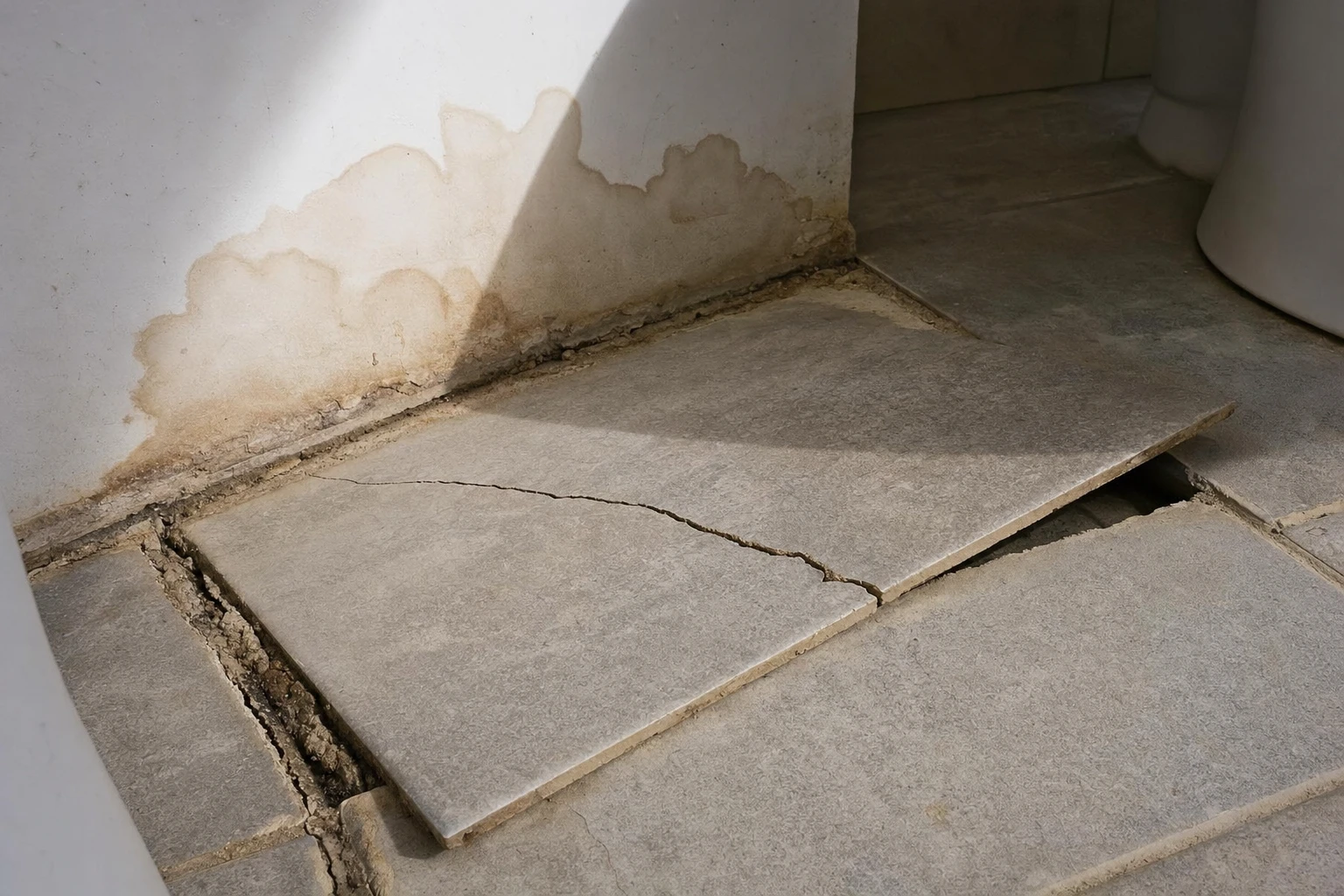
The types of defective workmanship that lead to Ontario Small Claims Court claims fall into a recognisable set. Property owners often know when something “doesn’t look right,” but are less certain whether poor workmanship actually gives rise to a legal claim. Not every construction defect justifies litigation. Minor cosmetic imperfections are common in renovation projects and can often be corrected quickly. More significant defects, however, may result in substantial repair costs, reduced property value, inconvenience, or damage to other parts of a building.
Construction and renovation projects also involve far more than visible finishes. Many of the most costly defects arise from work hidden behind walls, beneath floors, or within the structure of the building itself. These problems may remain unnoticed until they begin causing secondary damage, increasing both repair costs and disruption to everyday life.
The twenty examples below are the forms of defective workmanship most frequently encountered in residential and small commercial projects in Ontario. While every situation depends upon its own facts, these are the problems that most often become the subject of disputes in Ontario’s Small Claims Court. If you are weighing whether your own situation justifies a claim, our guide to deciding whether you have a case against your contractor covers how these disputes are assessed.
On This Page
- Improper Flooring Installation
- Roof Leaks Following Replacement
- Defective Tile Installation
- Faulty Plumbing Work
- Poor Interior Painting and Finishing
- Improper Window and Door Installation
- Defective Concrete Work
- Faulty Deck Construction
- Improper Waterproofing
- Inadequate Drywall Installation and Finishing
- Defective Electrical Installation
- Heating, Ventilation and Air Conditioning Deficiencies
- Cabinetry and Millwork Defects
- Masonry and Brickwork Problems
- Landscaping and Grading Deficiencies
- Improper Foundation Repairs
- Incomplete or Abandoned Projects
- Failure to Follow Agreed Specifications
- Failure to Protect Existing Property During Construction
- Deficient Project Supervision and Coordination
1. Improper Flooring Installation
Flooring should provide a stable, attractive, and durable finished surface. When flooring begins to separate, buckle, squeak excessively, or develop uneven surfaces shortly after installation, the problem may indicate defective workmanship rather than ordinary settling.
These issues may arise because the installer failed to properly prepare the subfloor, used inappropriate materials, ignored moisture conditions, or failed to follow accepted installation practices.
Property owners should photograph the affected areas as soon as problems become apparent, preserve invoices and product information, and obtain an independent assessment if extensive repairs appear necessary.
2. Roof Leaks Following Replacement
A newly installed roof should protect a property from the elements for many years. When water enters shortly after installation, the problem often extends beyond damaged shingles. Improper flashing, inadequate sealing around vents, poor installation techniques, or overlooked structural issues may all contribute to water intrusion.
Because water damage can spread rapidly, homeowners should document leaks immediately, photograph interior and exterior damage, and retain repair estimates before permanent repairs erase valuable evidence.
3. Defective Tile Installation
Poor tile installation frequently becomes apparent through cracked tiles, loose flooring, uneven spacing, hollow sounds beneath tiles, or deteriorating grout. Bathrooms and kitchens are especially vulnerable because moisture can penetrate defective installations and damage surrounding materials.
Although replacing individual tiles may solve isolated problems, widespread failures often suggest more fundamental installation deficiencies. Careful documentation of the condition before repairs begin can significantly strengthen any future claim.
4. Faulty Plumbing Work
Plumbing defects are among the most expensive forms of poor workmanship because relatively small leaks may produce extensive damage before they are discovered. Improperly connected pipes, leaking fixtures, inadequate sealing, poor drainage, or incorrectly installed water supply lines can result in mould, damaged flooring, ruined cabinetry, and costly restoration work.
Property owners should retain photographs of the leak, invoices for emergency repairs, and any reports identifying the source of the problem. Prompt action not only limits further damage but also preserves important evidence regarding the cause of the failure.
5. Poor Interior Painting and Finishing
Although painting may appear straightforward, professional finishing requires proper preparation, suitable materials, and careful application. Peeling paint, visible roller marks, uneven colour, paint applied over dirty or damaged surfaces, excessive drips, or failure to prepare walls properly may all indicate workmanship below reasonable expectations.
While isolated touch-ups are common during project completion, extensive finishing deficiencies throughout a property may justify compensation where significant corrective work becomes necessary. Photographs taken under good lighting, together with the original quotation describing the expected finish, often provide valuable evidence when assessing whether the completed work met reasonable expectations.
6. Improper Window and Door Installation
New windows and doors should improve energy efficiency, security, and protection from the weather. When they are improperly installed, homeowners may experience water leaks, cold drafts, excessive condensation, difficulty opening or closing them, or noticeable gaps around the frames.
These problems often result from inaccurate measurements, inadequate flashing, poor sealing, or improper fastening during installation. Even a high-quality product may perform poorly if it is installed incorrectly.
Property owners should photograph evidence of water intrusion, visible gaps, damaged finishes, and any resulting damage to drywall or flooring. Records of utility costs before and after installation may also assist in demonstrating unexpected energy losses.
7. Defective Concrete Work
Concrete should provide strength, durability, and long-term stability. Driveways, walkways, patios, garage floors, and foundations that crack excessively, settle unevenly, or deteriorate prematurely may indicate defective workmanship rather than normal aging.
Poor site preparation, inadequate reinforcement, improper mixing, insufficient curing time, or unsuitable weather conditions during installation can all contribute to early failure.
Because concrete naturally develops some minor shrinkage cracks, distinguishing ordinary wear from defective workmanship often requires careful evaluation. Property owners should monitor changes over time and preserve photographs showing the progression of any deterioration.
8. Faulty Deck Construction
A deck is intended to provide a safe and stable outdoor living space. Structural movement, loose railings, uneven stairs, excessive deflection, or visible separation between structural components may indicate serious construction deficiencies.
Safety concerns should never be ignored. Where structural stability appears questionable, property owners should restrict use of the deck until it can be inspected by an appropriately qualified professional.
Photographs, inspection reports, repair estimates, and documentation showing when the problems first appeared may become important evidence if legal proceedings become necessary.
9. Improper Waterproofing
Waterproofing failures often remain hidden until significant damage has already occurred. Basements, foundations, balconies, showers, and exterior walls may allow moisture to penetrate if membranes, drainage systems, sealants, or flashing were improperly installed.
The resulting damage may include mould growth, deteriorating drywall, warped flooring, damaged insulation, and structural deterioration if left unaddressed.
Property owners should act promptly to limit further damage while carefully documenting the source and extent of the moisture before repairs begin. Early investigation frequently assists in identifying whether the problem originated from defective workmanship or another cause.
10. Inadequate Drywall Installation and Finishing
Drywall provides the finished appearance of most interior walls and ceilings. When installed poorly, visible joints, nail pops, cracking, uneven surfaces, poorly finished corners, or obvious sanding marks may become increasingly noticeable after painting.
Although very minor imperfections may be expected under certain lighting conditions, widespread finishing deficiencies that detract from the appearance of the property or require extensive corrective work may indicate workmanship below reasonable professional standards.
Photographs taken under natural daylight and artificial lighting often reveal defects more clearly than casual inspection. Property owners should also preserve any project specifications describing the expected quality of the finished surfaces.
11. Defective Electrical Installation
Electrical work demands precision, experience, and careful attention to safety. Improperly installed outlets, switches, light fixtures, circuit breakers, or wiring may create more than inconvenience — they may pose serious safety risks.
Common warning signs include flickering lights, frequently tripped breakers, outlets that do not function properly, warm electrical panels, or unusual burning odours. Even where no immediate hazard exists, electrical work that fails to perform reliably may require extensive investigation and corrective work.
Property owners should avoid attempting their own repairs and should arrange for an independent inspection if concerns arise. Written reports, photographs, repair invoices, and records of recurring electrical problems can become valuable evidence if litigation becomes necessary.
12. Heating, Ventilation and Air Conditioning (HVAC) Deficiencies
Heating and cooling systems should provide reliable comfort throughout the year. When equipment is improperly installed or commissioned, homeowners may experience uneven temperatures, excessive energy consumption, poor airflow, persistent noise, or equipment failures shortly after installation.
In some situations, the problem lies not with the equipment itself but with undersized ductwork, poor installation practices, or improper system balancing. As a result, even expensive equipment may fail to perform as expected.
Property owners should preserve maintenance records, warranty documents, service reports, and utility bills that demonstrate unusual operating costs following installation.
13. Cabinetry and Millwork Defects
Custom cabinetry and built-in millwork are often centrepieces of a renovation. Poor workmanship may become apparent through misaligned doors, uneven drawer operation, loose hardware, inconsistent spacing, damaged finishes, or cabinets that are not level.
Although small adjustments are common after installation, widespread alignment problems or structural deficiencies may indicate careless workmanship rather than ordinary settling.
Photographs taken from multiple angles, together with copies of design drawings and specifications, help demonstrate whether the finished product corresponds with what was originally promised.
14. Masonry and Brickwork Problems
Brick, stone, and masonry construction should combine structural integrity with lasting appearance. Defects may include cracked mortar joints, loose bricks, uneven stonework, poor drainage, water penetration, or visible movement within the structure.
Because masonry is exposed to changing weather conditions throughout the year, poor workmanship may not become apparent until several seasons have passed. Water entering through improperly constructed masonry can damage insulation, framing, and interior finishes long before the underlying cause is discovered.
Property owners should document visible deterioration as early as possible and retain inspection reports explaining both the nature of the defect and the recommended corrective work.
15. Landscaping and Grading Deficiencies
Exterior projects involve much more than appearance. Improper grading, poorly constructed retaining walls, defective drainage systems, unstable interlocking stone, or incorrectly installed sod may lead to standing water, soil erosion, foundation concerns, or damage to neighbouring properties.
Landscaping contractors are generally expected to perform work that functions properly as well as looks attractive. A beautifully finished yard that channels water toward the home instead of away from it may ultimately create significant financial loss.
Photographs taken before, during, and after rainfall often provide particularly persuasive evidence of drainage problems. Survey information, grading plans, and repair estimates may also assist in establishing both the nature of the defect and the reasonable cost of correcting it.
16. Improper Foundation Repairs
Foundation repairs are intended to stabilize a structure and prevent further movement or water penetration. When repairs fail shortly after completion, property owners may continue to experience widening cracks, uneven floors, sticking doors and windows, or recurring moisture problems.
Foundation work requires specialized knowledge, and poor workmanship can significantly increase future repair costs. Homeowners should carefully document the condition of the property before and after repairs, retain engineering reports where available, and photograph any continuing movement or deterioration. Because foundation defects often worsen gradually, maintaining a chronological record can be particularly valuable.
17. Incomplete or Abandoned Projects
Not every defective workmanship claim involves poor quality alone. Sometimes the contractor simply fails to finish the project.
Uninstalled fixtures, partially completed renovations, missing trim, unfinished flooring, incomplete plumbing connections, or abandoned construction sites frequently leave property owners paying additional contractors to complete the work.
Before arranging for completion by another contractor, homeowners should thoroughly document the condition of the project, preserve all communications, obtain photographs of unfinished work, and retain quotations describing the reasonable cost of completing the remaining work. These records often become central to calculating financial losses.
18. Failure to Follow Agreed Specifications
Many disputes arise because the finished project differs from what was originally agreed upon. A contractor may substitute lower-grade materials, install different products, alter dimensions, omit agreed features, or complete work using methods that differ from the approved plans.
Sometimes these substitutions are minor and acceptable. In other situations, they substantially affect the appearance, durability, or value of the finished project.
Property owners should compare the completed work against quotations, drawings, product descriptions, invoices, and written communications describing the agreed scope of work. The more precisely expectations were documented before construction began, the easier it often becomes to identify significant departures from those expectations.
19. Failure to Protect Existing Property During Construction
Contractors are generally expected to exercise reasonable care not only in performing new work but also in protecting the existing property while the project is underway.
Damage to hardwood flooring, countertops, driveways, landscaping, windows, furniture, finished walls, or personal belongings may occur if reasonable precautions are not taken during construction.
Although some inconvenience is unavoidable during renovation, unnecessary damage caused by careless handling of materials, improper use of equipment, inadequate site protection, or poor housekeeping practices may become a separate source of financial loss. Photographs taken immediately before construction begins can provide an excellent reference point if questions later arise regarding damage allegedly caused during the project.
20. Deficient Project Supervision and Coordination
Successful construction depends upon more than the individual skills of various trades. Effective planning, scheduling, communication, and supervision are equally important.
Projects may encounter serious problems where trades interfere with one another, measurements are not properly coordinated, inspections are overlooked, or deficiencies identified during construction are ignored rather than corrected. The resulting defects often involve multiple components of the project rather than a single isolated problem.
Property owners should keep records of project timelines, meeting notes, emails, text messages, change requests, and photographs documenting progress throughout construction. These materials frequently help explain how problems developed and whether they resulted from poor management rather than isolated workmanship errors.
Recognizing When Professional Advice May Help
Defective workmanship is not always dramatic or immediately obvious. Many problems begin as relatively small deficiencies before developing into expensive repairs, and some defects emerge only after weeks or months of normal use.
Defective workmanship disputes rarely involve a single photograph or one disappointing aspect of a renovation. More often, they require a careful assessment of what work was promised, what was actually delivered, what losses have resulted, and what evidence is available to support those losses.
Not every construction defect justifies legal proceedings, and not every disagreement reflects poor workmanship. However, where defects result in significant financial loss, obtaining an objective legal assessment can help property owners understand their options before investing further time and expense.
Careful documentation remains one of the most important steps a property owner can take. Contracts, quotations, invoices, photographs, videos, inspection reports, expert opinions, repair estimates, and written communications often become the foundation of a successful claim. Preserving this evidence at an early stage frequently strengthens both settlement discussions and court proceedings.
Our office regularly assists homeowners, landlords, condominium owners, contractors, and small businesses involved in defective workmanship disputes. Whether the objective is negotiating a practical resolution or pursuing compensation through Ontario’s Small Claims Court, early legal advice can help identify the strengths of a claim, preserve valuable evidence, and develop an effective strategy for resolving the dispute as efficiently as possible.
Learn more about suing a contractor in Toronto for defective workmanship, or contact our office to discuss your project.
{“@context”:”https://schema.org”,”@graph”:[{“@type”:”BlogPosting”,”headline”:”20 Common Types of Defective Workmanship That Lead to Small Claims Court”,”description”:”20 common types of defective workmanship in Ontario and how claims are assessed.”,”mainEntityOfPage”:”https://legalmatterstoronto.com/types-of-defective-workmanship-ontario”,”author”:{“@id”:”https://legalmatterstoronto.com/#business”},”publisher”:{“@id”:”https://legalmatterstoronto.com/#business”}},{“@type”:”ItemList”,”name”:”20 Common Types of Defective Workmanship”,”numberOfItems”:20,”itemListElement”:[{“@type”:”ListItem”,”position”:1,”name”:”Improper Flooring Installation”,”url”:”https://legalmatterstoronto.com/types-of-defective-workmanship-ontario#improper-flooring-installation”},{“@type”:”ListItem”,”position”:2,”name”:”Roof Leaks Following Replacement”,”url”:”https://legalmatterstoronto.com/types-of-defective-workmanship-ontario#roof-leaks-following-replacement”},{“@type”:”ListItem”,”position”:3,”name”:”Defective Tile Installation”,”url”:”https://legalmatterstoronto.com/types-of-defective-workmanship-ontario#defective-tile-installation”},{“@type”:”ListItem”,”position”:4,”name”:”Faulty Plumbing Work”,”url”:”https://legalmatterstoronto.com/types-of-defective-workmanship-ontario#faulty-plumbing-work”},{“@type”:”ListItem”,”position”:5,”name”:”Poor Interior Painting and Finishing”,”url”:”https://legalmatterstoronto.com/types-of-defective-workmanship-ontario#poor-interior-painting-and-finishing”},{“@type”:”ListItem”,”position”:6,”name”:”Improper Window and Door Installation”,”url”:”https://legalmatterstoronto.com/types-of-defective-workmanship-ontario#improper-window-and-door-installation”},{“@type”:”ListItem”,”position”:7,”name”:”Defective Concrete Work”,”url”:”https://legalmatterstoronto.com/types-of-defective-workmanship-ontario#defective-concrete-work”},{“@type”:”ListItem”,”position”:8,”name”:”Faulty Deck Construction”,”url”:”https://legalmatterstoronto.com/types-of-defective-workmanship-ontario#faulty-deck-construction”},{“@type”:”ListItem”,”position”:9,”name”:”Improper Waterproofing”,”url”:”https://legalmatterstoronto.com/types-of-defective-workmanship-ontario#improper-waterproofing”},{“@type”:”ListItem”,”position”:10,”name”:”Inadequate Drywall Installation and Finishing”,”url”:”https://legalmatterstoronto.com/types-of-defective-workmanship-ontario#inadequate-drywall-installation”},{“@type”:”ListItem”,”position”:11,”name”:”Defective Electrical Installation”,”url”:”https://legalmatterstoronto.com/types-of-defective-workmanship-ontario#defective-electrical-installation”},{“@type”:”ListItem”,”position”:12,”name”:”Heating, Ventilation and Air Conditioning (HVAC) Deficiencies”,”url”:”https://legalmatterstoronto.com/types-of-defective-workmanship-ontario#hvac-deficiencies”},{“@type”:”ListItem”,”position”:13,”name”:”Cabinetry and Millwork Defects”,”url”:”https://legalmatterstoronto.com/types-of-defective-workmanship-ontario#cabinetry-and-millwork-defects”},{“@type”:”ListItem”,”position”:14,”name”:”Masonry and Brickwork Problems”,”url”:”https://legalmatterstoronto.com/types-of-defective-workmanship-ontario#masonry-and-brickwork-problems”},{“@type”:”ListItem”,”position”:15,”name”:”Landscaping and Grading Deficiencies”,”url”:”https://legalmatterstoronto.com/types-of-defective-workmanship-ontario#landscaping-and-grading-deficiencies”},{“@type”:”ListItem”,”position”:16,”name”:”Improper Foundation Repairs”,”url”:”https://legalmatterstoronto.com/types-of-defective-workmanship-ontario#improper-foundation-repairs”},{“@type”:”ListItem”,”position”:17,”name”:”Incomplete or Abandoned Projects”,”url”:”https://legalmatterstoronto.com/types-of-defective-workmanship-ontario#incomplete-or-abandoned-projects”},{“@type”:”ListItem”,”position”:18,”name”:”Failure to Follow Agreed Specifications”,”url”:”https://legalmatterstoronto.com/types-of-defective-workmanship-ontario#failure-to-follow-agreed-specifications”},{“@type”:”ListItem”,”position”:19,”name”:”Failure to Protect Existing Property During Construction”,”url”:”https://legalmatterstoronto.com/types-of-defective-workmanship-ontario#failure-to-protect-existing-property”},{“@type”:”ListItem”,”position”:20,”name”:”Deficient Project Supervision and Coordination”,”url”:”https://legalmatterstoronto.com/types-of-defective-workmanship-ontario#deficient-project-supervision”}]}]}